Emergency water extraction · Hollywood, FL
Emergency water extraction in Hollywood, FL
Water is spreading across your tile from a burst supply line, an overflowing toilet, a failed water heater or rain pushed under a sliding glass door. Our IICRC-certified technicians handle emergency water extraction 24/7 across Hollywood with truck-mounted and portable extractors, and they work to the ANSI/IICRC S500 standard for water damage restoration. Our crews work on the floors local homes actually have: porcelain and ceramic tile, original terrazzo, carpet laid over a concrete slab, and wood or vinyl plank. Buildings vary just as much. A ranch house in Hollywood Hills, a 20th-floor condo on Hollywood Beach and a storefront office each need a different setup for water extraction in Hollywood, FL. Extraction is step one, and the same team sets up drying and handles repairs if your property needs them. For emergency water removal or 24/7 water extraction, call (954) 872-0362. We dispatch as soon as you call.
- Answered 24/7iEmergency water extraction runs day and night across Hollywood, and the crew is dispatched as soon as you call.
- IICRC S500 water standardiTechnicians are IICRC-certified and work to the ANSI/IICRC S500 standard for water damage restoration.
- Truck-mounted and portable pumpsiTruck-mounted and portable extractors pull water off tile, terrazzo, wood and carpet.
- Tile, terrazzo and slab experienceiCrews work the floors local homes have, including grout lines and cabinet toe kicks where water hides.
- Weighted carpet and pad extractioniWeighted tools press water out of the carpet and pad together, so the pad is not left holding it.
- Drying and repairs, same teamiAfter extraction, the same crew sets up drying and handles repairs if your property needs them.

Call now for 24/7 emergency water extraction
Standing water in your Hollywood home or business? An IICRC-certified crew is on call 24/7, and we photograph everything and work with your insurance company from the first visit. Question that can wait? Contact us.
- The crew finds the water source and category first
- Standing water comes out with truck-mounted or portable pumps
- Drying is set up right after extraction
- IICRC-certified techniciansTrained to the ANSI/IICRC S500 water damage standard and S520 for mold.
- Answered 24/7A technician picks up day or night and dispatches a crew while you are on the phone.
- Photos and moisture logsDated photos and moisture readings on every visit, written for your adjuster.
- Thermal imaging on every jobInfrared cameras and moisture meters find water behind tile, baseboards and cabinets.
- One team through rebuildThe crew that dries the home puts back drywall, trim, flooring and paint.
Warning signs
When to call for emergency water extraction in Hollywood
Call for emergency water extraction whenever water is sitting on a floor and you cannot clear it in a few minutes with towels and a mop.
Water pooling on tile or terrazzo with a moving edge
If the edge of a puddle keeps creeping outward, water is still arriving faster than the slab can hold it, and tile and terrazzo do not absorb it; they spread it. The water runs under cabinets, baseboards and door thresholds into rooms that still look dry. Mopping cannot keep pace, and the grout joints are already carrying water down to the slab, where it will stay for weeks.
Carpet that squishes underfoot or feels wet along the walls
Carpet pad soaks up many times its weight in water and hides it well. If carpet squishes when you step on it, or the strip along the wall feels cold and damp, the pad beneath is saturated and the tack strip and baseboard are standing in water. A weighted extractor pulls that water out of the pad; towels and a household vacuum cannot reach it.
Water under kitchen or bathroom cabinets or around a toilet base
Water that shows at the toe kick of a cabinet or around the base of a toilet has already filled the space under the cabinet floor, where particleboard swells and mold grows unseen. The source is usually a supply line, a drain fitting or the wax ring under the toilet. Shut the fixture's valve, and call before the cabinet bottoms turn soft and start to sag.
A ceiling dripping onto the floor below
A ceiling drip means the floor or the plumbing above it has been wet long enough for water to soak through drywall or plaster, and the ceiling itself is now holding water. Switch off the breaker for lights and fans in that room, put a container under the drip, and stay out from under any bulge until the crew has drained it and checked the framing above.
Ankle-deep water from a burst water heater or supply line
A failed water heater tank releases 40 to 50 gallons at once, and a split supply line adds several gallons every minute until the main is closed. Ankle-deep water in a garage or utility room is more than a mop job: it reaches the water heater's own burner or elements, the washer, the panel wiring and every box stored on the floor, and it keeps the slab wet for days.
A toilet or drain that has backed up
Water from a backed-up toilet or drain is Category 3 under the IICRC S500 standard, the same category as sewage, whether it looks dirty or not. Extraction in that case runs with sewage cleanup precautions: protective gear, containment, disinfection and removal of any carpet, pad or drywall it touched. Keep people and pets out of the room until it has been cleared.
Rain or storm water pushed in under doors or sliding glass doors
Water that blows in under an exterior door or a sliding glass track during a storm carries whatever was on the patio and in the street with it, and it goes straight under the flooring at the threshold. Even an inch spread across a room soaks the bottom of every wall it touches. The sooner it is extracted, the less drywall and baseboard has to come out afterward.
Why speed matters once water is on the floor
Speed matters because water does not stay on the floor. Drywall and baseboards wick water up from a wet floor within hours, and the EPA advises drying water-damaged materials within 24 to 48 hours to prevent mold growth. Time works against the water quality too. The IICRC S500 standard says time and temperature can change the category of water, so a clean leak can turn into a contaminated one, and Hollywood's heat speeds that up. Volume builds faster than most people expect: State Farm reports that a failed washing machine hose can release about 650 gallons of water an hour, and at roughly 8.3 pounds per gallon that is more than 5,000 pounds of water on your floor.
What we do
Emergency water extraction services in Hollywood, FL
We match emergency water extraction to three things: the source and category of the water, the floor it is sitting on, and the building around it. A clean supply-line leak on porcelain tile in a single-family home needs different tools than a sewage backup on carpet in a condo tower. Each service below covers removing water only. Drying and rebuilding follow as separate steps with the same team.


Tile and terrazzo are the most common hard floors in Hollywood homes, and many of them sit on original slabs. The Census Bureau's 2024 American Community Survey puts the median year built for Hollywood's housing at 1970. Water sits on the surface of these floors. It also runs through grout lines and cracked tiles into the thinset mortar and the concrete slab below, where it can stay long after the surface looks dry.
Standing water removal starts with a submersible pump if the water is deep enough to pump. Technicians then make slow passes with squeegee wands and hard-surface extraction tools along grout lines, along baseboards and under cabinet toe kicks. While they work, they watch for two things. Grout lines that stay darker than the rest of the floor are still holding water, and tiles that sound hollow when knocked may have lost their bond. The EPA's water damage cleanup table adds a check for ceramic tile and vinyl floors: make sure the underflooring is dry, which is a drying task. Whether terrazzo has to come up gets a full answer further down this page.
Carpet water extraction on a flooded room depends on weighted tools that press water out of the carpet and the pad together. A hand wand pulls mostly from the carpet face. Stand-on and ride-on extractors put a technician's body weight on the vacuum head, squeezing the pad the way your foot does when the carpet squishes. One example is the Dri-Eaz Rover HVE, a 67-pound ride-on tool with a 19.75-inch extraction path that connects to a truck-mount or portable extractor; its product listing claims it can pull water from 1,200 square feet of carpet and pad in under two hours.
When the water is clean Category 1 and extraction starts quickly, the carpet itself can often be saved, although the pad is usually pulled because foam pad holds a lot of water and dries slowly. Category 3 is different. Under IICRC S500, carpet and pad soaked by Category 3 water are discarded. Pad replacement and delamination are covered on our carpet water damage restoration page.
On these floors, water sits on top and seeps through the seams. Laminate and other boards with an MDF or fiberboard core swell within hours and rarely recover once the edges lift. Click-together vinyl plank is waterproof on its face, but laid over a slab it traps water underneath. So we often lift rows of planks to extract what is sitting on the concrete. Solid and engineered hardwood get surface extraction with low-profile tools on the same visit, before the boards absorb more. Cupping, buckling and floor-drying mats belong to hardwood floor water damage repair, so we keep them off this page.
Category 2 gray water comes from washing machine or dishwasher overflows, a toilet overflow with urine but no feces, and some AC condensate. Category 3 black water includes toilet backups with feces, sewer line backups, rising floodwater and king tide water. Color does not decide it. The S500 definition counts any wasteline backflow from beyond a trap as Category 3, even when the water looks clear.
Gray water and black water extraction changes the job in several ways. Technicians wear gloves, boots and respirators. Contaminated hoses and recovery tanks stay separate from the ones used on clean water, and some portable units are built for that: the Dri-Eaz HVE 3000 spec sheet says it can bypass a truck-mount's waste tank on black water jobs and exhausts its air through a HEPA filter. Under S500, Category 2 and 3 jobs get contamination controls and worker protection, and cleaning comes before restorative drying. After extraction we apply an antimicrobial and remove porous materials the water touched. Health risks and the full list of what gets thrown away are on our sewage cleanup in Hollywood page.
About 28% of Hollywood's 69,850 housing units are in buildings with 20 or more units, according to the Census Bureau's 2024 American Community Survey. Many water losses in the city therefore involve elevators, building staff and the unit below. In a multi-story building we bring portable extractors up by elevator, follow the building's rules on work hours, pad the elevator and arrange parking for the van.
Water moves down through plumbing penetrations and wall cavities. That is why the crew asks building staff to open the units below and beside yours. For storefronts, offices and restaurants, extraction can run after hours so the business can stay open; ask about scheduling when you call. Questions about who pays in a condo are answered in the questions section below.
When water is several inches deep, water pumping comes before extraction. Typical cases are a ruptured water heater in a garage or storm water that came in under a garage door. Submersible pumps and trash pumps move the bulk of the water out, and extractors finish the floor. Pump-out units are fast: the Dri-Eaz HVE 3000 is rated to discharge up to 50 gallons per minute through its 1.5-inch outlet. A residential water heater tank usually holds 40 or 50 gallons, and a ruptured tank keeps refilling from the supply line until someone closes the valve.
Where pumped water goes is regulated. Hollywood's stormwater system of more than 4,600 catch basins and 70 miles of pipe empties into canals, lakes and other water bodies, according to the City of Hollywood. The city's stormwater code prohibits releasing non-stormwater into that system without city approval. Gray and black water therefore goes to a sanitary drain, never a storm drain. Water that rose from outside is handled as Category 3 every time and is usually a flood insurance claim, which our flood damage cleanup service handles.
Side by side
How water category changes emergency water extraction in Hollywood
The IICRC S500 standard sorts water by contamination into three categories, and the category sets the protective gear, what can be saved and the price.
| Category | Typical Hollywood source | What extraction involves | What usually can't be saved |
|---|---|---|---|
| Category 1 (clean) | Burst supply line, water heater supply line, ice maker or sink line | Standard extraction; S500 lets the crew skip contamination controls once the water is confirmed clean | Soaked pad and swollen MDF trim |
| Category 2 (gray) | Washing machine or dishwasher overflow, toilet overflow without feces, some AC condensate (can be Category 1 or 2) | PPE, contamination controls and antimicrobial after extraction | Pad, some carpet, particleboard |
| Category 3 (black) | Sewage backup, toilet with feces, storm surge, canal or king tide water | Full PPE, contained recovery tanks, antimicrobial, cleaning before drying | Carpet, pad and porous materials the water touched |
Categories get worse with time and heat. A Category 1 leak left over a hot weekend may be handled as Category 2 by Monday, so the clock matters. Rain is a judgment call: in a February 2026 position statement, the S500 consensus body said rain blown in during storms is not automatically Category 3, and the restorer decides after inspection whether the water is grossly contaminated.
How it works
Our emergency water extraction process in Hollywood, FL
Eight steps run from the first phone call to the hand-off: triage questions about the source and the building, a safety check with PPE on entry, stopping the source, photographs and first moisture readings, protecting contents, repeated extraction passes, removal of non-salvageable materials, and a photo log shared with you and your insurer. Drying equipment for structural drying is set on that same visit.
- Step01
Phone triage
We ask where the water is coming from, whether it has stopped, whether power is on in the wet rooms, and what floor and building type you have. IICRC S500 lists similar first questions for a restorer in its section on initial contact, including the source, date and time of the water, whether the source is under control, the materials affected and the age of the building.
- Step02
Arrival and safety
The crew shuts off power to wet areas at the breaker, checks for trip hazards and sagging ceilings, and puts on PPE for Category 2 or 3 water.
- Step03
Source stopped
If water is still flowing, we close the main shutoff, and a licensed plumber handles the pipe repair.
- Step04
Category and documentation
We photograph and video every affected room before anything moves, then take first moisture readings to see how far the water traveled.
- Step05
Contents protected
Furniture goes up on blocks or foil squares, and rugs, boxes and other floor items come out of the wet area.
- Step06
Extraction passes
Technicians run a truck-mount or portable unit, using weighted tools on carpet and hard-surface tools on tile, and repeat passes until each one returns little or no water.
- Step07
Non-salvageable materials removed
Soaked pad, swollen MDF baseboard and porous materials touched by Category 3 water come out, and an antimicrobial goes on after Category 2 or 3 losses.
- Step08
Hand-off
Drying equipment for structural drying is set on the same visit, and the photo log is shared with you and your insurer.
Extraction ends when passes come up nearly dry, and drying starts that same day.
Equipment
Truck-mount vs portable water extractors for Hollywood properties
Most restoration crews bring both machine types to a Hollywood job and choose on site. Truck mounted water extraction gives the most suction and tank capacity when the van can park close to the door. A portable water extractor goes where hoses cannot reach. The comparison below uses published specs for sample models.
| Truck-mounted extractor | Portable extractor | |
|---|---|---|
| Power source | Engine or generator built into the van; works even with your breakers off | Electric; plugs into the building's 115-volt circuits or a generator |
| Suction and tank size | Example: Aero Tech XT, 16 inches of mercury and a 155-gallon waste tank (Cleanfax, 2019) | Example: Dri-Eaz HVE 3000, 12 inches of mercury, a 12-gallon tank and up to 50 gallons per minute pump-out |
| Where it fits in Hollywood | Single-family homes and ground-floor units with parking near the door | Condo towers, upper floors, gated garages and interior offices |
| Noise and exhaust | Engine noise and exhaust stay outside at the van | No engine exhaust indoors; blower noise in the room |
| Limits | Hose length, floor height and a door left cracked for hoses | Small tanks to empty and circuit capacity (up to 13.5 amps per unit) |
When a truck-mounted water extractor is the right tool
A truck-mounted extractor's vacuum is powered by an engine or generator built into the van, with long hoses run from the van into your home. That setup gives stronger, steadier suction and a large waste tank, so the crew stops less often to empty and makes faster passes on big carpeted areas. Published specs show the size of the gap. The Aero Tech XT profiled by Cleanfax in 2019 lists 660 cubic feet per minute of airflow at 16 inches of mercury and a reel that holds 400 feet of 2-inch hose. In the same issue, HydraMaster put the typical hose pull for an average home at 150 to 200 feet.
Suction drops along every foot of hose, and lifting water up several floors costs more of it. That is why truck-mounts suit single-family homes in Hollywood Hills, Emerald Hills and West Hollywood, where the van can park close to the door. Expect three limits: hose length, floor height and a door left cracked for the hoses. The engine exhaust stays outside your home.
When portable water extractors work better in Hollywood high-rises
Portable water extractors are electric units carried in by hand. They do most of the work in Hollywood Beach and Intracoastal condo towers, in gated garages with low clearance, and on upper floors and in interior offices where hoses can't reach. They run on the unit's own circuits, or on a generator placed outdoors if the power is off.
Each unit needs its own circuit. The HVE 3000 spec sheet lists a draw of 12 amps with one blower and the pump-out running and 13.5 amps with both blowers, close to the limit of a standard 15-amp household circuit, so several units can run at once only on separate circuits. Tanks are small, 12 gallons on that model. For Category 1 and 2 water the crew empties them into a toilet or tub drain or pumps them out through a hose, while Category 3 waste is contained for proper disposal. We bring enough units for the size of the loss.
Pricing guide
Emergency water extraction cost in Hollywood, FL
The figures below are national and South Florida benchmarks, not our prices. Water extraction cost depends mostly on area, depth and category, and water removal cost climbs when pumping or contained disposal is needed. We give you a written price after seeing the water, the floor and the category. Ask about the inspection when you call.
Low1. Small Category 1 spill on tile (hourly figures
Benchmark ranges for this band are in the cost table below. We quote after an on-site moisture inspection.
Request a quote for emergency water extractionModerate2. One or two carpeted rooms ($500-$3,000 flat range
Benchmark ranges for this band are in the cost table below. We quote after an on-site moisture inspection.
Request a quote for emergency water extractionHigh3. Several rooms or Category 2 (HomeAdvisor standing-water range
Benchmark ranges for this band are in the cost table below. We quote after an on-site moisture inspection.
Request a quote for emergency water extractionSevere4. Category 3 (per-square-foot black water figures
Benchmark ranges for this band are in the cost table below. We quote after an on-site moisture inspection.
Request a quote for emergency water extractionTypical emergency water extraction price ranges
| Source and year | Figure | What it covers |
|---|---|---|
| HomeGuide, February 2026 | $4-$6 per sq ft (Category 1), $6-$9 (Category 2), $9-$12 (Category 3) | Water removal plus drying, by category |
| HomeGuide, February 2026 | $1,500-$5,000 | A loss with up to 12 inches of standing water in at least one room |
| HomeAdvisor, 2025 | Average about $3,833; most pay $1,364-$6,301; about $3.50-$7.50 per sq ft | Full water damage restoration, extraction plus drying |
| HomeAdvisor standing water removal (page dated 2022) | Most pay $1,611-$6,770; average $4,081; full range about $400-$8,000 | Includes yard and exterior drainage jobs |
| Restoration company price guides | About $75-$200 for the first hour and $50-$100 per added hour; about $500-$3,000 flat | Extraction alone, by the hour or by area and depth |
| PuroClean Pompano Beach guide (South Florida) | $3-$4 per sq ft clean water, $4-$6.50 gray, $7-$7.50 black | Full mitigation, by category |
Read the per-square-foot rows as full mitigation, not extraction alone. On an insurance-style estimate, extraction is usually one line item among many. Xactimate, the estimating software many insurers use, lists water extraction under its WTR EXT codes, and equipment makers print those codes on their spec sheets. The HomeAdvisor standing-water range runs high for indoor-only work because it includes yard drainage jobs. For a single Hollywood room of clean water caught early, the hourly and flat figures are the closer guide.
What changes the price of water extraction in Hollywood
- Square footage and depth of the water.
- Water category, since PPE, contained disposal and antimicrobial add cost.
- Floor type, because carpet and pad removal takes longer than extracting tile.
- How long the water sat before you called.
- Contents that must be moved or blocked up off the floor.
- Building access, such as high-rise elevator time, parking and work-hour rules.
- After-hours or holiday call-outs; we tell you the rate before we start.
- Debris removal and haul-away, such as soaked pad or drywall cut out after a Category 3 loss.
- Whether drying and repairs follow, which are separate line items.
Does homeowners insurance pay for emergency water extraction?
Homeowners insurance generally pays for emergency water extraction when the water was sudden and accidental, such as a burst supply line, a ruptured water heater or an overflowing appliance. Long-term seepage and rising floodwater are generally excluded, and flood needs a separate flood policy. Policies expect you to take reasonable steps to protect the property. That is why extraction is normally treated as mitigation; photograph the damage before anything moves.
Water claims are common and costly. Insurance Information Institute figures built on ISO/Verisk data put the average homeowners claim for water damage and freezing at $15,400 for 2019 to 2023, with about 1.5 such claims per 100 insured homes each year. On Florida residential policies issued on or after January 1, 2023, section 627.7152(13), Florida Statutes, voids any assignment of post-loss benefits, so you stay in control of the claim. This is general information, not legal or insurance advice. For documentation and claim steps, see our water damage insurance claim help page.
Why choose us
Why Hollywood owners choose Water Damage Hollywood Florida for emergency water extraction
Hollywood owners call us for emergency water extraction because the work is documented and the equipment matches the building.
Hollywood owners call us for emergency extraction because the work is documented and the equipment fits the building. Six points explain why: IICRC-certified technicians working to the ANSI/IICRC S500 standard, dispatch around the clock, extraction machines matched to a single-family home or a high-rise condo, photos and moisture readings shared with your insurer, one team through drying, mold prevention and repairs, and local ownership.
- Our technicians are IICRC-certified and work to the ANSI/IICRC S500 water damage standard.
- We dispatch 24/7, including nights, weekends and holidays.
- We carry truck-mount and portable extractors, so a single-family home and a 20th-floor condo each get the right machine.
- You get photos and moisture readings from the first visit, shared with you and your insurer.
- The same team moves straight into drying, mold prevention and repairs.
- We are locally owned in Hollywood.
How it works
What to do before the water extraction crew arrives at your Hollywood home
Before the crew reaches your home, a short list of safety and protection steps limits the damage: staying clear of water near outlets and cords, closing the main shutoff or the condo unit valve, photographing every wet room and the source, lifting electronics, papers and rugs off the floor, keeping windows shut, avoiding household vacuums, and calling your insurer. Fans stay off until the crew confirms the water is clean.
- Step01
Stay out of water near outlets, cords and appliances
Stay out of water near outlets, cords and appliances, and switch off breakers for wet rooms only if you can reach the panel while standing on dry ground; Ready.gov's flood guidance says not to touch electrical equipment that is wet or while you stand in water.
- Step02
Stop the water at the main shutoff
Stop the water at the main shutoff, which is often where the line enters the house, on a garage wall or near the water heater; in a condo, close the unit valve in the water heater or AC closet, or call the building engineer.
- Step03
Photograph and video every wet room
Photograph and video every wet room and the source before you move anything.
- Step04
Lift electronics, papers, shoes and rugs off the floor
Lift electronics, papers, shoes and rugs off the floor, and slide foil or plastic under furniture legs to stop rust and stain transfer onto wet carpet.
- Step05
Don't use a household vacuum on water
Don't use a household vacuum on water, and never shop-vac sewage.
- Step06
Keep windows shut
Keep windows shut, because outdoor air in Hollywood is humid most of the year and the EPA recommends keeping indoor humidity below 60%.
- Step07
If a ceiling is bulging
If a ceiling is bulging, stay out from under it and don't switch on the ceiling fan or lights below it.
- Step08
Keep children and pets away from Category 2 or 3 water
- Step09
Call your insurer to open a claim
Call your insurer to open a claim, and write down the time you found the water.
These are safety and protection steps only. Leave fans off until the crew confirms the water is clean, since the EPA's cleanup guidance warns against running fans before that is known.
Deeper answers
Emergency water extraction questions specific to Hollywood homes
Hollywood callers ask deeper questions about emergency water extraction than most restoration pages answer. Here are four of them, answered with the details that apply to local homes and buildings.
1.Can water trapped under tile and terrazzo floors be extracted, or does the floor have to come up?
Free water on top of tile and terrazzo can be extracted, and in most cases the floor does not have to come up. Terrazzo is marble, quartz, granite or glass chips set in cement or epoxy and ground smooth, as the National Terrazzo & Mosaic Association describes it. It was widely used in South Florida homes of the mid-20th century, and Hollywood has a large stock of housing from that era. About 44% of the city's 69,850 housing units were built between 1950 and 1969 (Census Bureau, 2024 American Community Survey). Many owners find terrazzo under old carpet.
Cement terrazzo that was installed correctly usually tolerates clean water. Refinishers often grind it wet during restoration, and the association's restoration specification calls for potable water and pH-neutral cleaners. Ceramic and porcelain tile behave differently. Suction pulls water off the surface and out of the grout, but water that has soaked into the thinset and slab can't be vacuumed out; it has to dry. So the crew records which tiles sound hollow, which grout lines stay dark and where meter readings are high, then hands that map to the drying team. Tiles come up only when the bond has failed, the tiles are cracked, or Category 3 water got underneath.
One safety note for older homes. The EPA lists vinyl floor tiles, sheet vinyl backing and flooring adhesives among materials that may contain asbestos, and about 73% of Hollywood housing units were built before 1980. Don't scrape or pry old vinyl tile or black mastic until a sample tested by an NVLAP-accredited lab clears it. We extract first and documents which tiles are sound before anyone talks about demolition.

2.Why does water extraction come before drying, and how much time does it save?
Extraction comes first because it pulls liquid water out directly, while dehumidifiers and air movers can only remove water after it evaporates. Removing water as a liquid is many times faster than waiting for it to evaporate, and basic physics shows why. Turning one gallon of water into vapor takes roughly 2.5 kilowatt-hours of heat, about what a 1,500-watt space heater uses in 100 minutes, and drying equipment has to supply that energy for every gallon left behind.
Every gallon left in carpet, pad or grout has to evaporate later into indoor air that is already humid in Hollywood. That adds equipment days and raises the bill. It also keeps materials wet longer, closer to the 24-to-48-hour window in which the EPA says mold can start. The EPA's water damage cleanup table puts the steps for wet carpet in the same order: remove water with a water extraction vacuum, then lower the humidity with a dehumidifier, then speed drying with fans.
Good extraction looks slow from the outside. It means several passes over each area, weighted tools on carpet and lifting vinyl plank where water hides underneath. Ask any company how it decides extraction is finished. The answer you want is "when passes return little or no water." we keep extracting until the passes come up dry before setting drying equipment.

3.What changes when water extraction happens in a Hollywood Beach condo or high-rise?
Water extraction in a Hollywood Beach condo or high-rise brings in building management, the association and your neighbors, which a house job rarely does. Condo towers along A1A and the Intracoastal often limit contractor work hours and ask for a certificate of insurance before a crew can enter. Most also require you to book a service elevator and have it padded. Truck-mount hoses rarely reach upper floors, so portable extractors do the work. That covers a lot of Hollywood homes: about 17% of the city's housing units are in buildings with 50 or more units (Census Bureau, 2024 American Community Survey).
Water moves down through plumbing penetrations, wall cavities and light fixtures. The units below and beside yours need checking within hours, and the source may be in another unit or in a building pipe. Tell building management or the association right away and note the time you called. Who pays for which part depends on section 718.111(11), Florida Statutes, and on your building's declaration; our condo water damage restoration page covers that split. This is general information, not legal advice. We coordinate with management, extracts every affected unit and keeps a separate photo record for each owner.

4.Is a shop vac or rented extractor enough for a small leak in a Hollywood home?
A shop vac is fine for a small Category 1 spill on tile or terrazzo that you catch right away, before it reaches baseboards, cabinets or carpet. Call a professional when any of these is true:
- Water reached the carpet pad, since a shop vac pulls from the carpet face and not the pad underneath.
- Water ran under cabinets, behind baseboards or under vinyl plank.
- Drywall is wet above the floor line.
- More than one room is wet.
- The water is Category 2 or 3.
- The leak ran overnight or while you were away.
Rented carpet cleaners are built for cleaning, not flood volumes, and their recovery tanks fill in minutes. For scale, State Farm puts a failed washer hose at about 650 gallons an hour. Even a professional portable extractor such as the HVE 3000 holds only 12 gallons before it has to pump out. There is an insurance angle as well: cleaning up yourself without photos and moisture readings can make it harder to show the extent of the damage later. Call and describe what you see, and we'll tell you whether it's a job you can handle yourself.

Service area
Emergency water extraction across Hollywood, FL neighborhoods
We provide 24/7 emergency water extraction in every Hollywood neighborhood and ZIP code, including 33019, 33020, 33021, 33023, 33024, 33025, 33026, 33027, 33028 and 33029. If you searched for water extraction near me while standing on a wet floor anywhere in the city, these are the areas our crews cover, and each one brings its own extraction setup. About 45% of Hollywood's housing units are detached single-family homes (Census Bureau, 2024 American Community Survey), and those are the jobs where a truck-mount usually reaches the door.
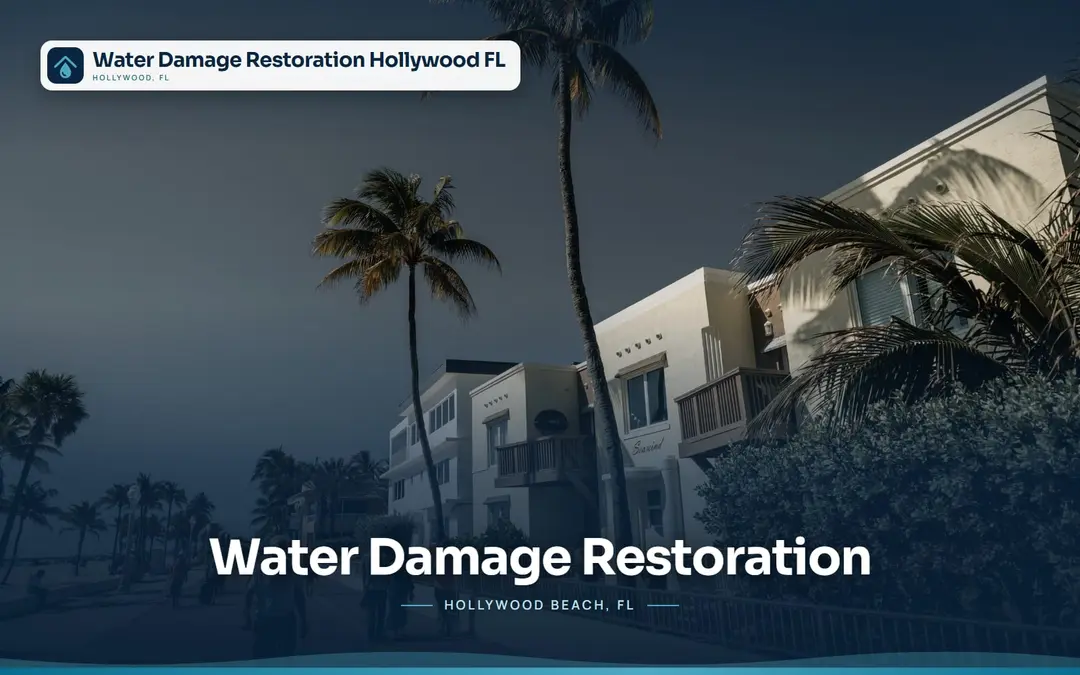
Hollywood Beach water damage helpi24/7 water damage restoration on Hollywood Beach, FL 33019 for condo leaks, king tide flooding, hotels and rentals. IICRC-certified crews. Call us now.
The 33019 barrier island, where high-rise condos and beachfront homes call for portable extractors and building coordination, and king tide or storm water at ground level is Category 3.
(954) 872-0362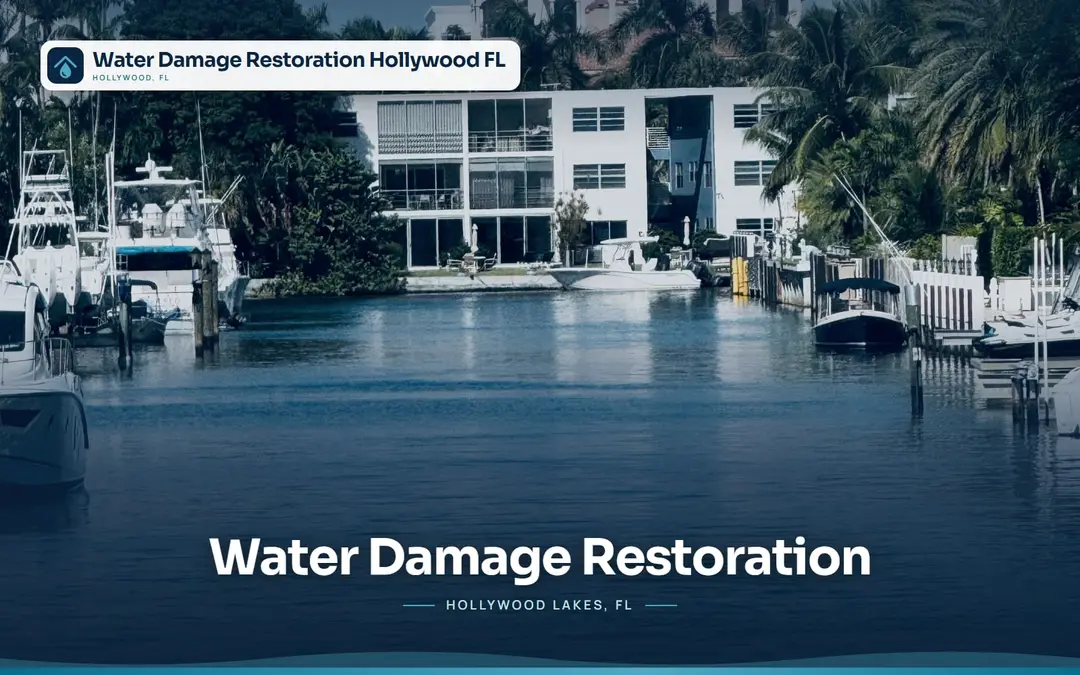
Hollywood Lakes water damage helpiWater damage restoration in Hollywood Lakes, FL for 1920s homes: plaster drying, sewer backups, king tide water and historic district repairs. Call 24/7.
One of the city's original neighborhoods near the Intracoastal, with older homes where tile or terrazzo often sits on the original slab.
(954) 872-0362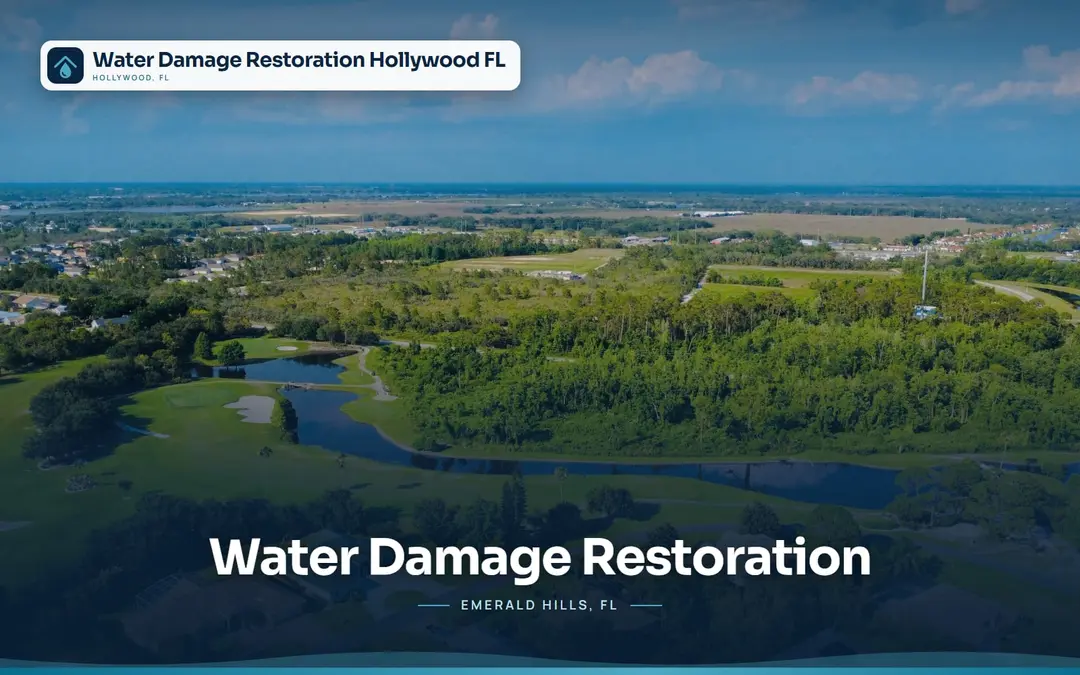
Emerald Hills water damage helpiWater damage restoration in Emerald Hills, FL for large homes with hardwood, stone, pools and art. IICRC-certified, 24/7, one team to rebuild. Call now.
Larger single-family homes where a truck-mount can usually park close to the door.
(954) 872-0362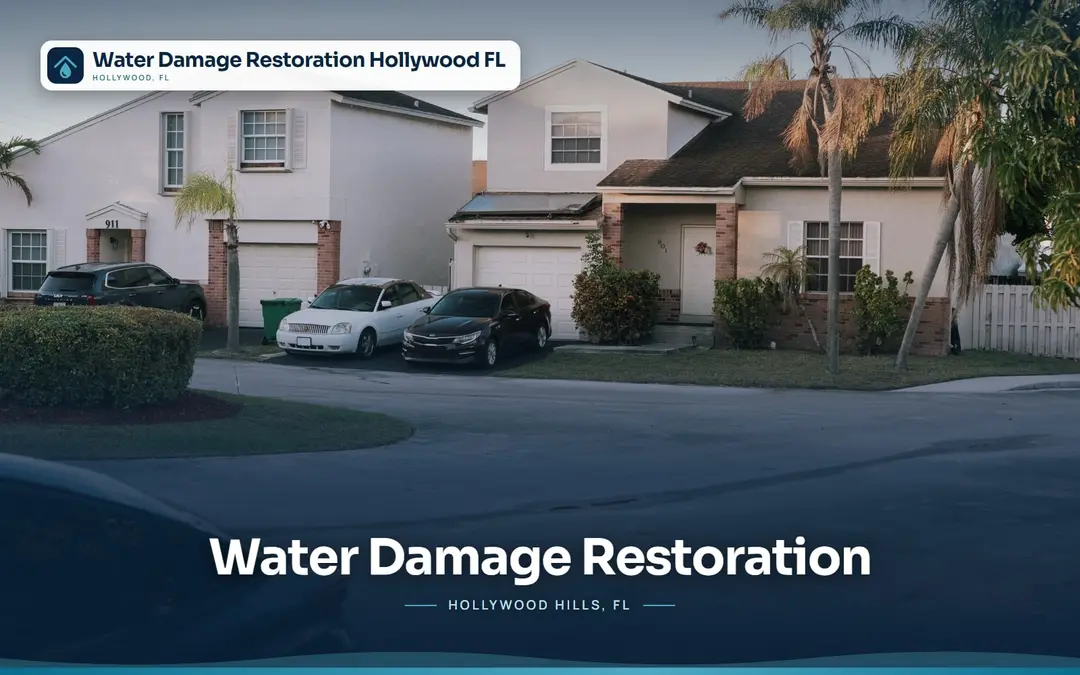
Hollywood Hills water damage helpiWater damage restoration in Hollywood Hills, Hollywood FL: slab leaks under terrazzo, AC closet overflows, old roofs. IICRC-certified, 24/7. Call now.
Established single-family streets where terrazzo under carpet is common.
(954) 872-0362
West Hollywood water damage helpiWater damage restoration in West Hollywood, FL (Hollywood, Broward County): rain, swale flooding, sewer backups and townhome leaks. IICRC-certified, 24/7.
Inland homes and townhomes where heavy rain floods streets, as on April 12-13, 2023, when Fort Lauderdale-Hollywood International Airport recorded 25.91 inches, a Florida record.
(954) 872-0362


Questions
Emergency water extraction FAQs
These answers cover cost, timing, floors and safety for emergency water extraction in Hollywood homes and businesses. Each one is specific to removing standing water; drying and repairs have their own pages.
How much does emergency water extraction cost in Hollywood, FL?
Most small extraction jobs fall around $500 to $3,000, depending on the area and depth of the water, according to restoration company price guides. HomeAdvisor's standing-water page shows most people paying $1,611 to $6,770, but that range includes yard drainage jobs. HomeGuide's February 2026 guide puts a restoration job with up to 12 inches of standing water in at least one room at $1,500 to $5,000. Category, floor type and building access all move the number, and we quote after seeing the job.
Is water extraction priced per square foot or per hour?
Both methods are used. Some companies bill by the hour, reported at about $75 to $200 for the first hour and $50 to $100 for each hour after. Insurance-style estimates usually list extraction per square foot as a line item in Xactimate, the estimating software many insurers use. Equipment makers even list their extractors under Xactimate's WTR EXT codes. Ask which method applies before work starts, and get it in writing.
Is after-hours emergency water extraction priced higher?
It can be. HomeGuide's 2026 cost guide notes that after-hours emergencies carry added costs, and many restoration companies add a night or holiday call-out charge. We tell you the rate on the phone before we send a crew. Waiting until morning usually costs more in damage than the call-out fee, because water keeps moving into baseboards, cabinets and drywall overnight.
Will insurance cover water extraction if the leak was my fault?
Often, yes. Homeowners policies generally cover sudden and accidental water damage even when you caused it, such as a tub you forgot to turn off or a washer hose you never tightened. What is typically excluded is long-term seepage, neglect and rising floodwater. Read your own policy, because the wording varies by insurer. Report the loss quickly and keep your photos. This is general information, not legal or insurance advice.
Do I have to pay for water extraction before my insurance claim is approved?
It depends on the company and your policy. Under section 627.7152(13), Florida Statutes, you cannot assign post-loss benefits on a residential policy issued on or after January 1, 2023. You stay in control of the claim, and the insurer pays you, or you and the contractor together. Ask us how payment works when you call. Keep every invoice and photo for the adjuster.
Should I wait for the adjuster before emergency water extraction starts?
No. Policies expect you to take reasonable steps to stop further damage, and waiting days for an adjuster lets water spread into walls and cabinets. The EPA advises drying wet materials within 24 to 48 hours to prevent mold. Photograph and video everything first. Keep removed materials or cut samples if your insurer asks for them, and let the extraction crew document the rest with photos and moisture readings.
Is water extraction from a flooded garage covered by homeowners insurance?
It depends on where the water came from. A burst water heater or supply line in the garage is usually treated as sudden and accidental, so it is often covered. Rain or storm water rising from outside is flood, which homeowners policies exclude. That needs a National Flood Insurance Program policy or a private flood policy. Tell your insurer the source when you report the loss, since the source decides which policy responds.
How long does emergency water extraction take?
Removing standing water from one to three rooms usually takes a few hours on the first visit. Larger or deeper losses take longer. Square footage, carpet and pad, water depth and the contents that have to move all change the time. For scale, the product listing for the Dri-Eaz Rover HVE ride-on tool claims it can pull water from 1,200 square feet of carpet and pad in under two hours. Extraction is only day one; drying usually runs several more days.
How fast can an emergency water extraction crew reach my Hollywood home?
We dispatch a crew as soon as you call, 24 hours a day, and give you an arrival window on the phone. Traffic on I-95, US-1 and A1A can stretch that window. Building access can too, since a condo tower may need a service elevator booked and a certificate of insurance on file first. Shut off the water and take photos while you wait.
What is the difference between water extraction and water mitigation?
Extraction is one step: physically removing standing water with pumps and extractors. Mitigation is the wider job of stopping further damage, which covers extraction plus removing wet materials, antimicrobial treatment, drying and monitoring. Insurers usually pay mitigation as one phase and repairs as another. On your paperwork, extraction shows up as its own line inside the mitigation estimate, and repairs come later on a separate estimate.
Does water extraction remove water from inside walls?
No. Extractors remove standing water from floors, carpet and pad. Water that wicked into drywall, baseboards and wall cavities has to be dried in place, or the wet material comes out, and that happens in the drying phase. The EPA's cleanup table says wallboard can be dried in place if it shows no obvious swelling and the seams are intact. The extraction crew marks wet walls with a moisture meter so drying starts in the right places.
Do baseboards have to come off during water extraction?
Sometimes. Swollen MDF baseboards are usually removed because they rarely recover. Pulling them also lets the crew extract water trapped along the wall and check the bottom of the drywall. Solid wood or tile baseboards may stay on if moisture readings allow it. Removed trim is photographed for the claim before it goes in the dumpster, so the adjuster can see what was taken out.
Do you need power and water at my home for water extraction?
Not always. Truck-mounted extractors carry their own engine, so they work even when your breakers are off. Portable extractors and drying equipment need working circuits or a generator, and a unit like the HVE 3000 draws up to 13.5 amps, so each one needs its own 15-amp circuit. Any generator runs outdoors, away from windows. Water service can stay off at the main until a plumber repairs the leak.
Does water extraction leave the floor completely dry?
No, and no honest company will say it does. Extraction removes standing and free water so the floor feels damp rather than wet. Moisture remains in the pad, grout, slab and bottom of the walls. That moisture comes out during drying, which is measured with meters until readings reach normal levels for each material. Expect a technician to come back and take those readings.
Can terrazzo floors be saved after water extraction?
Usually, yes. Cement terrazzo that was installed correctly generally tolerates clean water and dries out without replacement; refinishers often grind it wet. The problems are cracked sections, a failed bond to the slab and Category 3 water. The National Terrazzo & Mosaic Association's restoration specification has the owner and contractor walk the floor and mark each crack for no action, repair or replacement. After drying, a terrazzo specialist can regrind and polish any staining or haze.
Why do tiles sound hollow after a water leak and extraction?
A hollow sound when you knock on a tile usually means it has lost its bond with the thinset. Sometimes water getting underneath caused it, and sometimes the installation was weak from the start. Mark those tiles with painter's tape. They may stay down after drying, or they may need resetting. Cracked or lifting tiles over a wet slab are flagged for the drying team, because water trapped under them dries slowly.
Can carpet be saved after emergency water extraction?
Often, if the water was clean Category 1 and extraction started within a day or two. The pad is usually replaced because it holds water and dries slowly. The EPA's cleanup table calls for drying carpet and its backing within 24 to 48 hours. Carpet soaked by Category 3 water, or wet long enough to delaminate or smell, is discarded under IICRC S500.
Is water extraction different for laminate and vinyl plank floors?
Yes. Laminate has a fiberboard core that swells within hours, so it is rarely saved. Click-together vinyl plank is waterproof on top but traps water on the slab underneath, so planks are usually lifted to extract the water and check the concrete. Glue-down vinyl may be left in place if readings allow. If you have spare boxes of planks in the garage, keep them dry, since matching a discontinued style later is hard.
How does water extraction work under kitchen cabinets?
The crew pulls the toe-kick panel at the bottom of the cabinets, extracts with low-profile tools and checks the cabinet floor. Particleboard cabinet bottoms that have swollen usually need replacing, while plywood often dries. Water left under cabinets is a common source of hidden mold. Empty the sink base before the crew arrives so they can reach the back panel and the shutoff valves.
Does water extraction work on area rugs?
Rugs are lifted off the wet floor first so water can be extracted from the floor underneath. Wool, silk and hand-knotted rugs need careful off-site cleaning and drying to avoid dye bleeding and shrinkage. That work is handled as contents cleaning rather than floor extraction. Don't dry a wool rug in the sun. Move it to a dry room until it goes out for cleaning.
Will water extraction disturb old vinyl floor tiles in older Hollywood homes?
Extraction itself doesn't, but removing or scraping the tiles can. The EPA lists vinyl floor tiles, sheet vinyl backing and flooring adhesives among materials that may contain asbestos, and you can't tell by looking. Leave old tiles and black mastic in place until a trained professional takes a sample for an NVLAP-accredited lab. If it tests positive, a licensed abatement contractor removes it before any flooring work.
Is it safe to walk on a wet floor before water extraction?
Only if no outlets, cords or appliances are in or near the water and the power to that area is off; federal flood guidance on Ready.gov says not to touch electrical equipment that is wet or while you are standing in water. Wet tile and terrazzo are very slippery. A soaked ceiling above the leak can also fall. If the water may be sewage, stay out of it and keep it off your skin.
When is water extraction treated as black water?
Water is treated as Category 3 black water when it contains sewage or comes in from outside. Under IICRC S500, that covers toilet backups with feces, sewer line backups, wasteline backflow from beyond a trap whatever its color, all seawater flooding and rising water. King tide water on Hollywood Beach falls in this group. Clean water that sits for days can also become Category 3. Black water extraction requires PPE and discarding porous materials.
Does AC condensate water need emergency water extraction?
If it has pooled on the floor or soaked the carpet, yes. A clogged condensate line on a closet air handler can overflow for days before anyone notices, and condensate is usually treated as Category 1 or 2 water. Extraction comes first. An AC technician then clears the clog and checks the overflow switch or secondary drain pan, which is separate work from the extraction.
Should I turn off electricity before water extraction starts?
Switch off breakers for the wet rooms only if you can reach the panel while standing on a dry floor. If the panel is in a wet garage or you are unsure, don't touch it; call FPL or a licensed electrician and wait outside. Ready.gov says to turn off electricity only if it is safe to do so. The crew checks the power again on arrival before any extraction starts.
Where does extracted water go after water extraction?
Clean and gray water from portable tanks is usually emptied into a toilet or another sanitary drain. Truck-mount waste tanks are emptied at approved disposal points. Contaminated water never goes into a storm drain, because Hollywood's storm drains feed canals, lakes and other water bodies, and the city's stormwater code bars dumping non-stormwater into that system without approval. Category 3 waste stays sealed in its tank until disposal.
Is antimicrobial treatment needed after water extraction?
For Category 2 and 3 water, yes. IICRC S500 calls for contamination controls on those jobs, with cleaning and treatment of affected surfaces before drying starts. For a fresh Category 1 leak, antimicrobial is often optional. Ask which product is used and whether it is EPA-registered. Keep a note of the product name for your claim file.
Can kids and pets stay home during black water extraction?
Keep them out of the affected area, and away from the home if sewage spread widely. Category 3 water can carry bacteria and viruses, and Ready.gov advises that children should not take part in disaster cleanup. The crew sets containment around the work area. People with weak immune systems, pregnant women and young children should stay elsewhere until cleaning is complete. IICRC S500 says an indoor environmental professional should be brought in when occupants are high-risk.

Get emergency water extraction in Hollywood now
Water keeps moving into walls, cabinets and pad while you wait. An IICRC-certified our crew is on call 24/7 across Hollywood, from Hollywood Beach high-rises to homes in West Hollywood. Call (954) 872-0362 and tell us where the water is coming from. Photos and moisture readings for your insurer from the first visit. Prefer to write? Contact us and send us a message.
Homeowners with water spreading on tile
Water Damage Hollywood Florida extracts standing water from tile, terrazzo, carpet and wood floors, then sets up drying so it does not stay in the slab.
Condo owners with a leak coming from above
We pull water off your floors and check baseboards and cabinet bases, with photos and readings for your insurer and the association.
Businesses with a wet storefront or office
Extraction is set up for the building you have, and the same team moves on to drying so staff can get back to work.